

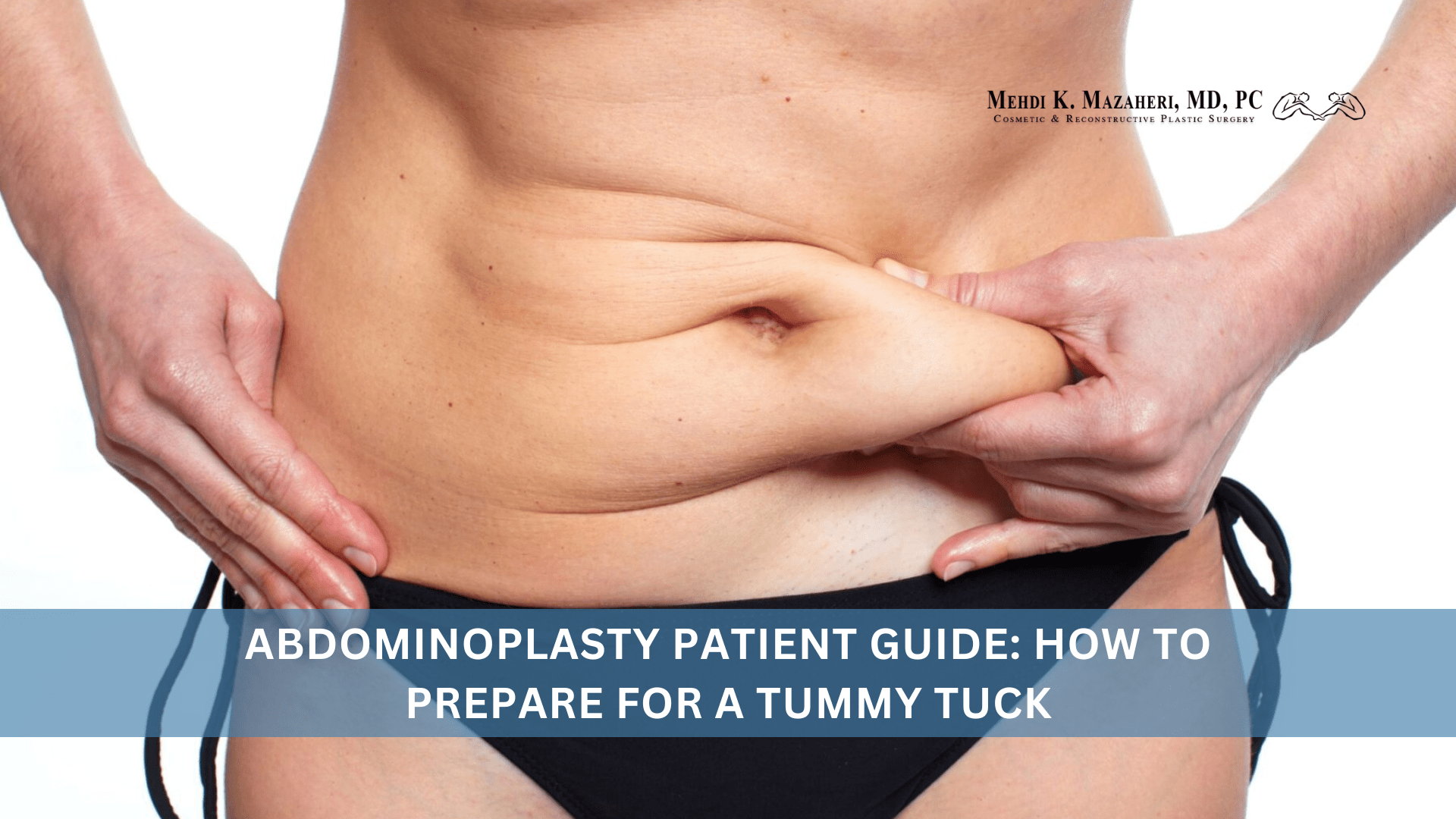
Not to be confused with liposuction, a tummy tuck is a cosmetic procedure that consists of excess skin removal to flatten the abdomen. If you’re considering abdominoplasty, our tummy tuck patient guide below details everything you’d want to know about the abdominoplasty procedure.
Talk to your doctor to determine if you’re an ideal candidate for tummy tuck surgery.
Page Topics
Should I Get a Tummy Tuck?
You’ll benefit from a tummy tuck if you…
- Maintain current weight
- Have loose abdominal skin
- Experience back pain
- Are done child-bearing
Avoiding getting this procedure if you are…
- Pregnant
- Diabetic
- Dieting
- Have heart disease
- Have lung disease
- Have liver disease
What Are the Types of Tummy Tucks?
| Type of Tummy Tuck | Targets | Description |
|---|---|---|
| Mini | Lower abdomen | Most popular among moms, mini tummy tucks address the problematic “pooch” just below the belly button. With a single horizontal incision, your surgeon will tighten loose muscles and remove sagging skin. |
| Classic | Upper and lower belly | Ideal for patients with flabby skin above and below the navel, this option creates the most natural-looking results. To tighten optimal muscles, classic tummy tucks require an incision from one pubic bone to the other. |
| Extended | Upper and lower abdomen + flanks | This option involves horizontal and vertical incisions, specifically targeting the flabby abdomen, hips, and back skin. Extended abdominoplasties are suited for individuals who’ve had substantial weight loss. |
Choosing Your Abdominoplasty
The amount and location of your excess skin will help your plastic surgeon determine the type of tummy tuck that’ll produce the best results. Other determining factors may include:
- Previous surgeries
- Skin quality
- Desired results
- Body type
Lose weight with the abdominoplasty that’s right for you! Dr. Mazaheri and his expert staff will address your concerns and help you achieve life-changing results.
How Do I Prepare for a Tummy Tuck?
During the initial consultation, your plastic surgeon will evaluate your body and discuss your abdominoplasty options. Your surgeon will also ask about the following topics:
- Lifestyle
- Support system
- Allergies
- Medical history
- Abdominoplasty steps
- Surgery costs
- Potential risks
- Recovery expectations
Things to Do
- Eating well-balanced meals
- Taking vitamin c supplements
- Eating naturally fibrous foods
- Arranging for home recovery
- Gathering supplies for homecare
Things to Avoid
- Dieting
- Smoking
- Taking aspirin
- Using herbal medication
- Drinking alcohol
This is the time to schedule an appointment with your doctor for a physical exam and blood testing.
See Our Successful Tummy Tuck Procedures
What to Expect During an Abdominoplasty
Informed patients tend to have less anxiety and are better equipped for recovery. The overview below will provide information regarding each step.
Step 1: Administer Anesthesia
Your board-certified cosmetic surgeon will recommend general anesthesia or intravenous sedation.
Step 2: Make Incisions
Your surgeon will discreetly place incisions between your pubic hairline and belly button as well as above your belly button.
- Mini abdominoplasty: One small incision just below your belly button.
- Classic abdominoplasty: Pubis bone to bone waistline incision.
- Extended abdominoplasty: Lateral and horizontal waistline incisions.
Step 3: Tighten Weak Muscles
During the procedure, your surgeon will pull and stitch weaker muscles together to provide a toned aesthetic.
What Should I Expect During Recovery?
- Medications
- Compression garments
- Follow-up dates
- Hygiene dos and don’ts
Get the Best Body Enhancement With Dr. Mazaheri
For over 30 years, Dr. Mazaheri has performed successful tummy tucks. Contact us at (480) 613-9142 to schedule a consultation.
Dr. Mazaheri is a Board Certified Plastic Surgeon and a member of The American Society of Plastic Surgeons. After more than sixteen years of education and advanced training, Dr. Mazaheri opened his Scottsdale practice in 2003. He is a thorough and experienced surgeon with a strong focus on achieving patient needs. Dr. Mazaheri’s areas of specialty include breast and body contouring procedures such as breast augmentation, mastopexy, tummy tucks, liposuction and other body sculpting procedures. He and his friendly staff will only recommend procedures that will help you achieve your desired results. Focusing on your needs both before and after a procedure is Dr. Mazaheri’s top priority.
Comments are closed.